Visit MargaretPerry.org

Visit MargaretPerry.org
The Great Katharine Hepburn has relocated to margaretperry.org, where you will find even more amazing reviews and commentaries on films from the classic era to today!
Showing posts with label The Philadelphia Story (1940). Show all posts

23 February 2014

Oscar-Winning Director George Cukor (as in "cucumber")

George Cukor was nominated for five Academy Awards for Best Director, ultimately winning in 1965 for MY FAIR LADY (1964). His first nominations were for two of the 10 films he made with Katharine Hepburn, LITTLE WOMEN (1933) and THE PHILADELPHIA STORY (1940).

oscar
Producer Jack Warner, Audrey Hepburn, Rex Harrison,
and George Cukor at the 1964 Academy Awards

Although Cukor was known primarily as a "women's director," he actually holds the record for having directed the most male Oscar winners: James Stewart in THE PHILADELPHIA STORY (1940), Ronald Coleman in A DOUBLE LIFE (1947), and Rex Harrison in MY FAIR LADY (1964). (TCM Classic Movie Trivia)

25 January 2014

Hepquote! Tracy Lord is going crazy!

PS headstand meme

One of the coolest things about Katharine Hepburn is her athleticism. She just loved standing on her head and could do so well into old age. I've never been able to stand on my head. One of the many ways I am not as cool as Katharine Hepburn. Alas.

12 July 2013

Dynamic Duos in Classic Film: Katharine Hepburn and Cary Grant

This post is written in conjunction with the Dynamic Duos in Classic Film blogathon hosted by Once Upon a Screen and the Classic Movie Hub. This article and many like it can be found on margaretperry.org.

H ii
HOLIDAY (1938)

Katharine Hepburn had the privilege of playing with some of the best leading men of her day, from Humphrey Bogart to John Wayne. She is perhaps best known for the nine films she made between 1942 and 1967 with her long-term lover Spencer Tracy. Hepburn also worked with director and friend George Cukor on a remarkable ten movies, starting with her Hollywood début picture, A BILL OF DIVORCEMENT (1932), until THE CORN IS GREEN (1979) just a couple years before his death.

These two Hepburn teamings may be the most well-known, but we must not forget that Hepburn made four films with sex-pot Cary Grant before she ever met Tracy, and three of these four movies were directed by Cukor.

30 November 2012

Sequins, Satin, and Silk: Hollywood Costumes at the V&A

Earlier this week I had the most amazing opportunity to visit the Victoria and Albert Museum in central London to see their Hollywood Costume exhibit. The exhibit showcases more than 100 iconic film costumes from the last 100 years of cinema. About thirty of the costumes were from what I consider the "Golden Age of Hollywood," from the earliest silents through the 1960s. The designers featured included those familiar names we've seen so often in the opening credits: Edith HeadAdrian, Walter Plunkett, Travis Banton, Travilla, and Irene Sharaff, among many others.
There were costumes from all our favourite classic films, from Charlie Chaplin's Tramp costume in the THE CIRCUS (1928) to GONE WITH THE WIND (1939) and THE WIZARD OF OZ (1939) to the Darth Vader get-up from STAR WARS (1977). The greatest film stars were also celebrated: both Katharine and Audrey Hepburn, Barbara Streisand, Marilyn Monroe, Judy Garland, Marlene Dietrich, Mary Pickford, John Wayne, Joan Crawford, Bette Davis, Errol Flynn - you name it! Below is a list of the costumes that struck my fancy, along with images from the original films.


Katharine Hepburn: MARY OF SCOTLAND (1936) and THE PHILADELPHIA STORY (1940)
Compared to the elaborate Queen Elizabeth I costumes which surrounded it, Hepburn's Mary of Scotland gown looked delicately petite. Walter Plunkett's frock is a crimson silk velevet with a gold leaf thistle pattern. Punkett remembers that after filming MARY OF SCOTLAND:

20 October 2012

Dear Katharine Hepburn...


This post is written in conjunction with the Letter to the Stars Blogathon hosted by Marcela (another Hepburn fan!) at Best of the Past.

"Write a letter to your favorite dead star. What did you always want to tell them? How did they change your life? What's your favorite thing about them? How did they impact the world and what legacies did they leave? Write about anything you like, as long as it's addressed to your favorite dead star. Pretend they can hear you: It's your chance!"

Dear Katharine Hepburn,

Just want to say thank you for what you've taught me. Although we didn't properly meet until after your passing in 2003, sometimes I feel like I know you better than my oldest friends. I probably spend more time with you on average than with any other single person. That would be sad, if you weren't such an awesome dame.

10 July 2012

Poll: Which of her many Oscar nominations should Katharine Hepburn have won?

portrait of Katharine Hepburn and her four Oscar statuettes
Katharine Hepburn was nominated for the Academy Award for Actress in a Leading Role 12 times, a record that has only been beaten in recent years by Meryl Streep, although treep has only won three of her nominations while Hepburn has won four. Of Katharine Hepburn's Oscar nominations that she didn't win, which of the following do the you think she deserved to win? Vote on the poll below!

21 June 2012

And the winners are...

Over the past month or so I've posted four polls about Katharine Hepburn movies and co-stars. Although you can continue to cast your votes on those polls, I thought I'd give all those who have already voted a run-down on the scores.
What's your favorite Katharine Hepburn classic? has 20 votes so far and they are pretty evening distributed across the board. BRINGING UP BABY (1938) is in the lead with five votes, followed by LITTLE WOMEN (1934) with four votes. THE PHILADELPHIA STORY (1940) and AFRICAN QUEEN (1951) are both tied for last place with three votes each. The remaining five votes selected "other" and that list includes to votes for THE LION IN WINTER (1968), and one each for HOLIDAY (1938), ON GOLDEN POND (1982), and CHRISTOPHER STRONG (1933).
15 people have voted on What's your favorite Katharine Hepburn Oscar win? GUESS WHO'S COMING TO DINNER (1967) and THE LION IN WINTER (1968), for which Katharine Hepburn won back-to-back Oscars, are tied for the lead with six votes each. MORNING GLORY (1933), Hepburn's first ever Oscar nomination and win, is trailing with only two votes and Hepburn's final Oscar win, ON GOLDEN POND (1982) brings up the rear with a single vote.
Cary Grant and Katharine Hepburn made four films together and you can vote for your favorite in What's your favorite Cary Grant/Katharine Hepburn movie? Nine of the fourteen votes went to the ever-popular BRINGING UP BABY (1938). THE PHILADELPHIA STORY (1940) has only three votes and HOLIDAY (1938) only two. Unfortunately, SYLVIA SCARLETT (1935) brings up the rear without a solitary vote.
The most recent poll Who's your favorite of Hepburn's leading men? gives several options, but so far people have only voted on two: six votes have gone to Cary Grant and five to Spencer Tracy. John Wayne, Humphrey Bogart, Henry Fonda, and Peter O'Toole are also listed, but no one seems overly impressed with their performances, apparently!

These are all running polls, so feel free to cast your vote at any time. If you don't see the answer you would like, you can always enter your own in the "other" option. Let me know if you have an idea for a poll question and I will post it for you. You can see all the existing polls under the "Polls" tab at the top of the blog, and there is also a link to each individual poll in the Table of Contents. Thanks for voting!

07 June 2012

HOLIDAY (1938)

Yes, they did actually
make this film.
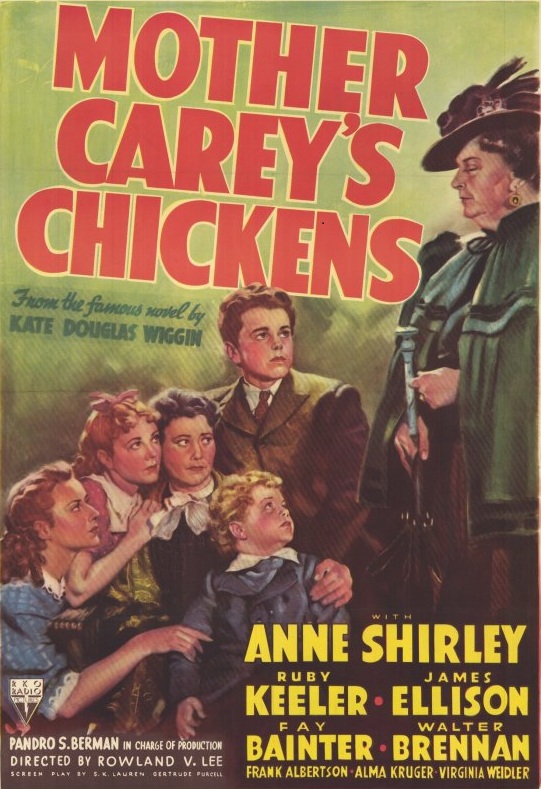
By the end of the 1930s it had appeared that Katharine Hepburn's star had already risen and fallen. Due to a string of commercial failures (BREAK OF HEARTS, SYLVIA SCARLETT, A WOMAN REBELS, QUALITY STREET, to name a few), the independent movie theatres had labelled Hepburn "box office poison." This bad press made it difficult for even her good films of the period (ALICE ADAMS, STAGE DOOR, BRINGING UP BABY) to turn a profit for the studio. When RKO Radio Pictures offered Katharine Hepburn a part in a film entitled MOTHER CAREY'S CHICKENS, she knew it was time for her to quit that studio and move on to greener pastures. She paid RKO $75,000 to loan her out to Columbia for HOLIDAY (for which she was paid a handsome $150,000).

Hope Williams
as Linda Seton
This wasn't the first time Hepburn had seen this material. After her graduation from Bryn Mawr in 1928, she got a job as understudy to Hope Williams who was playing the lead in Philip Barry's play Holiday on Broadway (it was while working as Williams' understudy that she married her beau from college days, Ludlow Ogden Smith, and moved to New York City). However, when Hepburn remembers this early opportunity in show business, she says "I soon realized that Hope was a very healthy girl. It wasn't that I wished her anything bad. She was very talented and very nice. But I understood that being an understudy was almost worse than not being in the theatre at all, if you understudied someone who never missed a performance" (Chandler, 122). When Williams offered to stay home for a matinee and allow Hepburn perform in her stead, Hepburn turned her down. "An excess of pride," explains Hepburn. "It was what I suffered from." Hepburn would later use material from Holiday for her first ever screen test, which is how she caught the eye of director and long-time friend George Cukor.

Linda and Johnny perform an
acrobatic stunt in HOLIDAY
HOLIDAY is a very thoughtful story, bordering on the philosophical. Johnny Case (Cary Grant) is engaged to Julia Seton (Doris Nolan) only ten days after meeting her on vacation at Lake Placid. When he comes home to meet the family, he confides in Julia's older sister Linda (Hepburn) about his plans for the future. His dream is to quickly make enough money to quit work and take an extended holiday so that he can take time to think and discover what it is he is working for. Although he and Linda understand the grand potential of his scheme, he has a harder time convincing his fiancee and their father the viability of the plan. Linda and Johnny are both taken aback by Julia's reluctance to stray from the severe conventionality of the patriarchal way of life exhibited by other members of their social class. Linda, like Johnny, has always despised wealth and the lifestyle it forces upon its subjects. Julia and her father, on the other hand, aspire to expand the family's fortune and respectability as far as possible and are unsympathetic towards Johnny's attempt to excuse himself from the cycle of acquiring wealth and privilege. Johnny is conflicted between his love from Julia and his desire to follow his dreams. Linda is conflicted by her love for her sister, and her sister's potential happiness with Johnny, and her own romantic feelings for him and the life he wants to pursue. (NOTE: In a future post on this blog, I intend to pursue a feminist reading of HOLIDAY, examining the role of the Hepburn character in the narrative of the story, as well as the more subtle nuances concerning the representation of women in the film text as a whole.)
"Don't you say a word about Leopold! He's very sensitive!"
"Your's?"
"Uh-huh - Looks like me."
Although critics praised HOLIDAY, and Katharine Hepburn's performance in it, depression-era audiences did not enjoy some of the inherent themes. While 30s movie-goers loved to observe "the privileged class enjoying its privileges" (THE PHILADELPHIA STORY (1940)), they were not sympathetic to the Johnny character who wanted to chuck a good job out the window so that he could have the freedom to think. America was looking for pragmatism and optimism during the 1930s, and Johnny's happy-go-lucky scheme to quit work and philosophize about life was too impractical to be attractive.

Katharine Hepburn did not linger long in Hollywood after the release of HOLIDAY. Selznick was tempted to cast her as Scarlett in GONE WITH THE WIND, but she withdrew her name from that contest. Though she must have been aware of what such a role would mean for her dwindling career, Hepburn never felt that the part was right for her. When Vivien Leigh was discovered, Hepburn returned East for a year or so of self-imposed exile from Hollywood. She would not be in Hollywood for all of 1939, universally acknowledged to be the biggest year in cinema history, but she would return in 1940 in a big way with THE PHILADELPHIA STORY.

30 May 2012

Poll: What's your favorite Katharine Hepburn classic?

17 May 2012

THE PHILADELPHIA STORY (1940)


The Philadelphia Story (1940) marks the turning point in Hepburn’s film career. She had decided to return home in 1938 after being labeled “box office poison” for a series of failed costume dramas at RKO. After a hurricane swept away her family’s Fenwick home, Hepburn tried to piece her life and career back together. Playwright Philip Barry visited her in Fenwick with a play which he had written for her about a Philadelphia socialite modeled after Hepburn herself.  The play ran for an unprecedented 415 performances. Hepburn’s then boyfriend, Howard Hughes, purchased the rights for her so that she would be able to return to Hollywood and call her own shots. Rather than returning to RKO, Hepburn signed a contract with MGM studio mogul Louis B. Mayer. The Philadelphia Story was the first film in which Hepburn had almost exclusive control over the casting of the film. She was given top billing across Cary Grant and Jimmy Stewart and her friend George Cukor was chosen to direct. 

The Philadelphia Story is about an aloof American socialite who is about to be remarried. Her fiance is a "man of the people" type of guy who has had to work his way up from the bottom. Things get complicated when her ex-husband C.K. Dexter Haven (Cary Grant) appears with some unsettling news. In order to pacify the editor of Spy magazine, the family must allow a reporter (Jimmy Stewart) and camerawoman attend the wedding, or else the magazine will print a shameful article about the father's philandering. The story spans the day and night leading up to the wedding. In this time, Tracy undergoes some serious character growth as she struggles to identify her purpose as a wife, woman, and as a human being. The script is witty and sophisticated, with just the appropriate amount of philosophical digging to get the audience thinking.

The plot of The Philadelphia Story both promotes and contradicts many feminist ideals. Some audiences viewed Tracy’s reformation as a taming, though many film critics debate this point. Although Hepburn’s character is scolded and insulted by the various male characters, they each in one way or another love, admire, or respect her. Tracy's "upper-classness" (Andrew Britton, 1995) is the epitome of Hepburn, but in a way very much unlike her alter ego Jo March. Tracy is an intellectual with very strong opinions about herself and about other people. She is not ambitious like Jo March but she sets very high standards for herself and the people around her. One might observe that Jo March is very like the young Hepburn, the kid behind the star, while Tracy epitomizes that which audiences identify in her star persona – class, intelligence, wit, and high moral standards. Through her role as Tracy, Hepburn came to represent a “special class of the American female,” full of strength and “inner divinity.”

There are three male leads in this film, arguably four if you count the father. Each has a unique relationship with Tracy. She expresses contempt for her father’s philandering, and although he cruelly calls her a “prig and a perennial spinster,” the two are reconciled by the end of the film. Her fiancé in the film worships her but his narrow-minded class and gender prejudices limit him from being truly equal to her. Jimmy Stewart’s character, the journalist Macaulay Connor , falls for Tracy, but only after expressing his own contempt for her class and lifestyle. The impossibility of their being matched is prevented by his snobbishness not hers, and in many ways one could argue that he is as reformed by the end of the film as she is.

Tracy’s relationship with her ex-husband, played by Cary Grant, is the most complex. He refuses to be impressed by her “so-called strength” and he leads the pack in trying to reform her, but it is clear that he truly loves her. His arguments for her reformation are not that she should be less of a strong, independent-minded woman, but that she should be more of a compassionate human being: “You’ll never be a first-class human being or a first-class woman until you have learned to have some regard for human frailty.” His appeal is not an attack on her female strength, but more an appeal to her humanity. It is clear that he and Tracy are evenly matched because he does not wish to break her will but only to refine it. The tension between Tracy and Macaulay is based on social and economic class division, but C.K. Dexter Haven argues on the basis of the human vs. either the merely material statue, or the other-worldly, deific goddess. He supports the refined, yet secular, view of mankind which is indicative of his expectations for perfection, regardless of social class. At one point he says "You (Tracy) could marry Mack the night watchman and I'd cheer for you!" 

Tracy's father's objections are the most infuriating because he blames her for his affair with another woman. He also attacks her womanhood when he says, 
"You have a good mind, a pretty face, a disciplined body that does what you tell it to.
You have everything it takes to make a beautiful woman except the one essential: an
understanding heart. And without that you might as well be made of bronze."
Her father's remarks might cut the deepest, but at bottom they are simply a reiteration of what Haven has already said, including the statue motif. The fact that these arguments are framed in a way that limits Tracy's femaleness, they are not read as such by the characters involved. He also practically retracts all that he has said by the end of the film when he denies that Tracy has ever been a disappointment as a daughter, thus voiding his entire arguments against her.

The film concludes on a high note, and Tracy has been able to maintain every ounce of dignity she had a the beginning of the story, which is why it is difficult to view this film as another Taming of the ShrewThe movie was a big hit, winning Hepburn another Academy Award nomination Jimmy Stewart his first Oscar. Hepburn’s career was back on track. From this point forward, Hepburn had a direct hand in the parts she chose to play and in the casting and filming of future projects. Not all of them were as successful as The Philadelphia Story, but Hepburn was able select roles that both stretched her abilities and took advantage of the strength of her increasingly feminist persona.


ShareThis