|
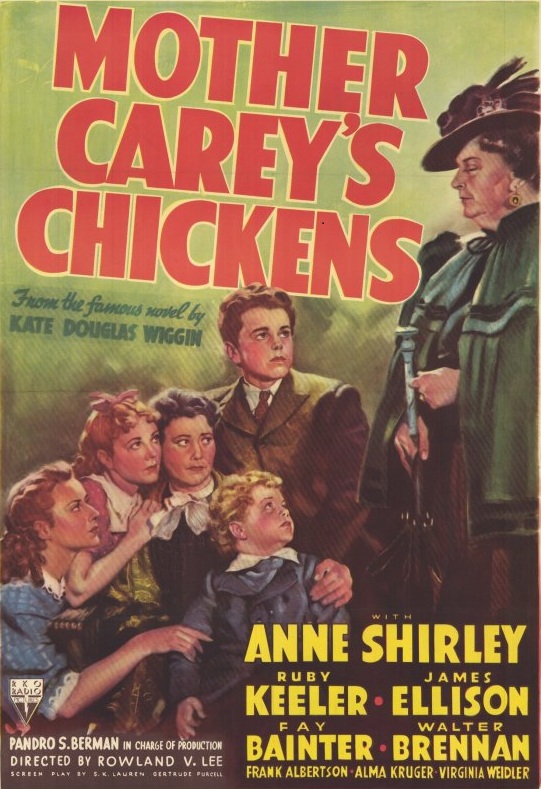
Yes, they did actually
make this film. |
By the end of the 1930s it had appeared that Katharine Hepburn's star had already risen and fallen. Due to a string of commercial failures (
BREAK OF HEARTS, SYLVIA SCARLETT, A WOMAN REBELS, QUALITY STREET, to name a few), the independent movie theatres had labelled Hepburn "box office poison." This bad press made it difficult for even her good films of the period (
ALICE ADAMS, STAGE DOOR, BRINGING UP BABY) to turn a profit for the studio. When RKO Radio Pictures offered Katharine Hepburn a part in a film entitled MOTHER CAREY'S CHICKENS, she knew it was time for her to quit that studio and move on to greener pastures. She paid RKO $75,000 to loan her out to Columbia for
HOLIDAY (for which she was paid a handsome $150,000).
 |
Hope Williams
as Linda Seton |
This wasn't the first time Hepburn had seen this material. After her graduation from Bryn Mawr in 1928, she got a job as understudy to Hope Williams who was playing the lead in Philip Barry's play Holiday on Broadway (it was while working as Williams' understudy that she married her beau from college days, Ludlow Ogden Smith, and moved to New York City). However, when Hepburn remembers this early opportunity in show business, she says "I soon realized that Hope was a very healthy girl. It wasn't that I wished her anything bad. She was very talented and very nice. But I understood that being an understudy was almost worse than not being in the theatre at all, if you understudied someone who never missed a performance" (
Chandler, 122). When Williams offered to stay home for a matinee and allow Hepburn perform in her stead, Hepburn turned her down. "An excess of pride," explains Hepburn. "It was what I suffered from." Hepburn would later use material from Holiday for her first ever screen test, which is how she caught the eye of director and long-time friend George Cukor.
 |
Linda and Johnny perform an
acrobatic stunt in HOLIDAY |
HOLIDAY is a very thoughtful story, bordering on the philosophical. Johnny Case (
Cary Grant) is engaged to Julia Seton (Doris Nolan) only ten days after meeting her on vacation at Lake Placid. When he comes home to meet the family, he confides in Julia's older sister Linda (Hepburn) about his plans for the future. His dream is to quickly make enough money to quit work and take an extended holiday so that he can take time to think and discover what it is he is working for. Although he and Linda understand the grand potential of his scheme, he has a harder time convincing his fiancee and their father the viability of the plan. Linda and Johnny are both taken aback by Julia's reluctance to stray from the severe conventionality of the patriarchal way of life exhibited by other members of their social class. Linda, like Johnny, has always despised wealth and the lifestyle it forces upon its subjects. Julia and her father, on the other hand, aspire to expand the family's fortune and respectability as far as possible and are unsympathetic towards Johnny's attempt to excuse himself from the cycle of acquiring wealth and privilege. Johnny is conflicted between his love from Julia and his desire to follow his dreams. Linda is conflicted by her love for her sister, and her sister's potential happiness with Johnny, and her own romantic feelings for him and the life he wants to pursue. (NOTE: In a future post on this blog, I intend to pursue a feminist reading of
HOLIDAY, examining the role of the Hepburn character in the narrative of the story, as well as the more subtle nuances concerning the representation of women in the film text as a whole.)
 |
"Don't you say a word about Leopold! He's very sensitive!"
"Your's?"
"Uh-huh - Looks like me." |
Although critics praised
HOLIDAY, and Katharine Hepburn's performance in it, depression-era audiences did not enjoy some of the inherent themes. While 30s movie-goers loved to observe "the privileged class enjoying its privileges" (
THE PHILADELPHIA STORY (1940)), they were not sympathetic to the Johnny character who wanted to chuck a good job out the window so that he could have the freedom to think. America was looking for pragmatism and optimism during the 1930s, and Johnny's happy-go-lucky scheme to quit work and philosophize about life was too impractical to be attractive.
Katharine Hepburn did not linger long in Hollywood after the release of
HOLIDAY. Selznick was tempted to cast her as Scarlett in
GONE WITH THE WIND, but she withdrew her name from that contest. Though she must have been aware of what such a role would mean for her dwindling career, Hepburn never felt that the part was right for her. When
Vivien Leigh was discovered, Hepburn returned East for a year or so of self-imposed exile from Hollywood. She would not be in Hollywood for all of 1939, universally acknowledged to be the biggest year in cinema history, but she would return in 1940 in a big way with
THE PHILADELPHIA STORY.