Visit MargaretPerry.org

Visit MargaretPerry.org
The Great Katharine Hepburn has relocated to margaretperry.org, where you will find even more amazing reviews and commentaries on films from the classic era to today!
Showing posts with label George Cukor. Show all posts

02 March 2014

Why LITTLE WOMEN (1933) is a very big deal

sisters
“There’s one thing George and I agree on. Actually, we agree on almost everything. I don’t know anything we don’t agree on. One thing we really agree on is, we love LITTLE WOMEN. We loved doing it. And we love the film we made.” (Katharine Hepburn in Chandler, 83)
LITTLE WOMEN (1933) was nominated for three categories in the 6th annual Academy Awards (1932/33): George Cukor for directing, RKO studios for best production, and Sarah Y. Mason and Victor Heerman for writing (adaptation). Though the film came in third for direction and best production, husband and wife writing team Mason and Heerman walked away with the Oscar. Funnily enough, Katharine Hepburn was nominated, not for her performance as Jo, but for her role as Eva Lovelace in MORNING GLORY (1933), her first of four Oscar wins. Hepburn always insisted she was nominated for the wrong film.

23 February 2014

Oscar-Winning Director George Cukor (as in "cucumber")

George Cukor was nominated for five Academy Awards for Best Director, ultimately winning in 1965 for MY FAIR LADY (1964). His first nominations were for two of the 10 films he made with Katharine Hepburn, LITTLE WOMEN (1933) and THE PHILADELPHIA STORY (1940).

oscar
Producer Jack Warner, Audrey Hepburn, Rex Harrison,
and George Cukor at the 1964 Academy Awards

Although Cukor was known primarily as a "women's director," he actually holds the record for having directed the most male Oscar winners: James Stewart in THE PHILADELPHIA STORY (1940), Ronald Coleman in A DOUBLE LIFE (1947), and Rex Harrison in MY FAIR LADY (1964). (TCM Classic Movie Trivia)

02 December 2013

CMBA Film Passion 101 Blogathon: THE WOMEN (1939)

This post is written in conjunction with the Classic Movie Blog Association (CMBA) Film Passion 101 Blogathon.

CMBAbanner 101

Old movies were a natural part of my childhood. My parents have always enjoyed classic films, so I grew up with AMC, Turner Classic Movies, and movies from our own VHS collection. My mother's best friend from college would hand down her old movies whenever she upgraded to a digital edition. The first classic movie I ever saw was THE WIZARD OF OZ (1939) at my aunt's house. As a kid, movies were just movies, and it wasn't until my teenage years that I made my love for classic movies my own.

I remember watching THE WOMEN (1939) on TCM with my mom. I was probably about 13 years old and I was eating jelly beans (it's funny what you remember, isn't it?). I remember laughing my head off at the fast-paced dialogue. I remember the costumes. The movie can be viewed in full on YouTube.

the women ii
Joan Fontaine, Norma Shearer, Rosalind Russell, Mary Boland, and Paulette Goddard

31 August 2013

Rex Harrison (31 August SUTS)


rex ii

RexThis post is written in conjunction with the Summer Under the Stars Blogathon hosted by Sittin’ on a Backyard Fence and Scribe Hard on Film. Full listings for SUTS programming on Turner Classic Movies can be found HERE.

"When I was ten we moved and I decided that none of the names I was then called - Reggie, Bobby, Baa - suited me. Somehow I hit on Rex. I must have heard someone calling for their dog and thought it sounded rather nice."

"There is always a struggle, a striving for something bigger than yourself in all forms of art. And even if you don't achieve greatness, even if you fail, which we all must, everything you do in your work is somehow connected with your attitude toward life, your deepest secret feelings."

25 August 2013

Book Review: "Celluloid Gaze" by Boze Hadleigh

celluloid gaze coverI won this book last year from my first ever blogathon, the Queer Film Blogathon 2012 hosted by Garbo Laughs and Pussy Goes Grrr. Not being terribly interested in queer theory myself, I was tempted to set this book aside. But flipping through I noticed a whole chapter devoted to George Cukor, Katharine Hepburn's best pal in Hollywood and her director for ten movies. My interest was also piqued by the forward by noted homosexual writer and raconteur Quentin Crisp, or THE NAKED CIVIL SERVANT (1975).

If you haven't heard of Boze Hadleigh (I hadn't), let me introduce you. Hadleigh is the authority on the homosexual scene in Hollywood. He has an MA in journalism and has used his talents for researching and writing about Hollywood's both closeted and outed gay communities. He's written more than 15 books, most of them centre on LGBT themes and Hollywood gossip. Two of his works, "Hollywood Gays" and "Hollywood Lesbians" are definitive exposés of the homosexual side of the Hollywood star system.

12 July 2013

Dynamic Duos in Classic Film: Katharine Hepburn and Cary Grant

This post is written in conjunction with the Dynamic Duos in Classic Film blogathon hosted by Once Upon a Screen and the Classic Movie Hub. This article and many like it can be found on margaretperry.org.

H ii
HOLIDAY (1938)

Katharine Hepburn had the privilege of playing with some of the best leading men of her day, from Humphrey Bogart to John Wayne. She is perhaps best known for the nine films she made between 1942 and 1967 with her long-term lover Spencer Tracy. Hepburn also worked with director and friend George Cukor on a remarkable ten movies, starting with her Hollywood début picture, A BILL OF DIVORCEMENT (1932), until THE CORN IS GREEN (1979) just a couple years before his death.

These two Hepburn teamings may be the most well-known, but we must not forget that Hepburn made four films with sex-pot Cary Grant before she ever met Tracy, and three of these four movies were directed by Cukor.

10 December 2012

Where's the snow, Miss Hepburn?

Apparently, the day after I left England to return to the Unites States earlier this week, it snowed over there! What's with that!? It seriously had to wait until I left the country before huge, white, fluffy snowflakes were released over the English towns and countryside?! Unjust!

So now I'm looking out on a wet, grey, not-quite-cold-enough, Pennsylvania day and dreaming of a white Christmas. When we moved up here from Virginia I expected to see snow on the ground from November onwards! Alas, it was not to be. I am hoping that these pictures of Katharine Hepburn's winter-weather escapades will encourage the powers that be to dump a load of the white stuff on my doorstep. Please and thank you.


12 November 2012

Poll: Great Adaptations of LITTLE WOMEN

A previous post on this blog mentions the various "Great Adaptations" of films based on novels Turner Classic Movies will be featuring this month. Possibly the most quintessential American novel, Little Women by Louisa May Alcott, has also been made into a number of popular films, two of which will be airing this month. My personal favorite is George Cukor's LITTLE WOMEN (1933) starring Katharine Hepburn as Jo. My friend Megan, on the other hand, much prefers the June Allyson version, which also stars Elizabeth Taylor and Margaret O'Brien (1949). The most recent adaptation of the classic is the 1994 Winona Ryder version. 
Which is your favorite?

Jo: Katharine Hepburn
Meg: Frances Dee
Beth: Jean Parker
Amy: Joan Bennett
Marmee: Spring Byington
Laurie: Douglas Montgomery
Professor Bhaer: Paul Lukas
Aunt March: Edna May Oliver 

Pros: Katharine Hepburn is Jo March - tomboy, Yankee, headstrong, devoted to family. The music and the gentleness of the black and white picture captures the warm feel of Alcott's original story.
Cons: Overall, the film can seem a bit melodramatic. Spring Byington, as much as I love her, does not give her best performance here. They also completely omit the exchange between Jo and Amy when Amy burns Jo's writing and they quarrel and then Jo saves Amy when she falls through the ice. I don't actually know if Cukor actually read the whole book, despite Hepburn's prodding.... 

21 October 2012

Hepburn and Tracy Get Steamy on TCM

Monday, October 22 Turner Classic Movies will be airing six of the nine films Spencer Tracy and Katharine Hepburn made together.

WOMAN OF THE YEAR (1942) - 8:00 pm
Directed by: George Stevens
Written by: Ring Lardner, Jr. and Michael Kanin
Genre: comedy, romance
Co-starring: Fay Bainter, Reginald Owen, Sara Haden
Synopsis: When down-to-earth, all-American sports writer Sam Craig (Tracy) first meets high-flying international political correspondent Tess Harding (Hepburn), sparks fly in more ways than one. The unlikely pair falls in love, but marriage proves difficult as the two attempt to coordinate their mismatched life priorities.
Margaret's rating: 8/10

15 September 2012

TRAVELS WITH MY AUNT (1972): A Katharine Hepburn Original

Sunday night at 8:00pm EST, Turner Classic Movies will be showing a Maggie Smith classic, George Cukor's TRAVELS WITH MY AUNT (1972). When I first saw this movie, I thought it was one of the funniest things I had ever seen, but I am thinking now that I was possibly too young to understand what was going on. It is still a good film, primarily due to the fantastic performance given by Dame Maggie, but it's themes are definitely PG13. It won the Academy Award for best costume design, and it was also nominated for best leading actress, best art direction, and best cinematography.

23 July 2012

POLL: What is your favorite 1930s Katharine Hepburn movie?

1.) HOLIDAY (George Cukor, 1938)
Although Johnny (Cary Grant) is crazy about his fiancee Julia, Julia doesn't seem crazy about Johnny's plans for their future. Her sister Linda (Hepburn), on the other hand, feels more than sympathy for the young energetic dreamer engaged to her beloved sister.

18 June 2012

Queer Film Blogathon 2012: SYLVIA SCARLETT (1935)

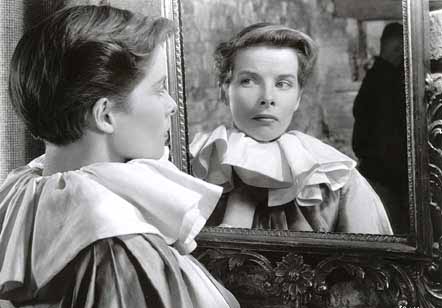
This post is written in conjunction with the second annual Queer Film Blogathon hosted by Garbo Laughs and Pussy Goes Grrrr! The first film that came to mind for me when I signed up to participate in this blogathon (my first, as it happens!) was George Cukor's SYLVIA SCARLETT (1935), the first film of four to pair the great acting talents of Katharine Hepburn and Cary Grant.

The idea to make a film of SYLVIA SCARLETT was entirely the brainchild of Katharine Hepburn and her director friend George Cukor (who was himself, by all accounts, homosexual). He called it "our love child" and she called it "our flopperoo." Hepburn invested some of her own money into the project:
"I sank some of my own money into SYLVIA SCARLETT. 'Sank' is the right word. I could have dropped it into the ocean with bricks tied to it and had a better chance of seeing it again" (Chandler 93).
"I always kept a little foolish money on the side. Foolish money is money I thought I could afford to be foolish with. It wasn't the money that was foolish. It was I" (Ibid., 94).
The preview showing of SYLVIA SCARLETT was a legendary catastrophe. Hepburn sat next to costar Natalie Paley (who plays her romantic rival) and they couldn't figure out why the audience weren't laughing at the funnier scenes. At one point during the movie, audiences stared to leave. Afterwards Cukor and Hepburn went up to producer Pandro Berman (who never wanted to make the picture in the first place) and told him they'd make another movie for him for nothing. He said he never wanted to see either of them ever again (he would - they made a lot more pictures together both at RKO and MGM).
However badly SYLVIA SCARLETT did at the box office, Hepburn herself received some fairly positive notices (Edwards, 145):
"The dynamic Miss Hepburn is the handsomest boy of the season. I don't care for SYLVIA SCARLETT a bit, but I do think Miss Hepburn is much better in it than she was as the small-town wallflower in ALICE ADAMS" (New York Harold Tribune).
"SYLVIA SCARLETT reveals the interesting fact that Katharine Hepburn is better looking as a boy than a woman" (Time).
"SYLVIA SCARLETT is a tour de force, made possible by Miss Hepburn's physical resemblance to the adolescent male" (New York Post).
SYLVIA SCARLETT is a film nested in multiple layers of doubles and contradictions. First of all, the subject matter contains themes of gender ambiguity which are paired off in doubles, the most prominent of which is that Sylvia/Sylvester is a girl masquerading as a boy. There is also the dual nationality aspect of the film which places the Hepburn character in particular in a sort of no man's land of identity. The film itself failed to win over audiences because it was simultaneously too safe yet too risqué. The result is altogether too ambiguous.

SYLVIA SCARLETT is about a girl and her father, Henry (Edmund Gwenn), who are forced to flee France because he has been fiddling with the accounts. In an attempt to deceive the authorities, Sylvia cuts off all her hair and disguises herself as a boy. On the boat to England, she/he and her father meet Monkey (Cary Grant), an English con-artist with whom they join forces. The group is joined by a cockney housemaid named Maudie, who becomes Henry’s new wife, and the troupe goes to the English seaside as a traveling band of performers. It is there they meet local Bohemian artist Michael Fane (Brian Aherne). Sylvia immediately falls for him and he himself gets a "queer feeling" whenever he looks at the boy.
The Hepburn character is confronted with a struggle that often accompanies "doubles roles," roles in which the character switches between two identities. This is especially true in this case if we examine Sylvia/Sylvester's relationship with the father figure. The opening sequence in the movie (which was tacked on at the last minute in an attempt to justify Sylvia's radical transformation into Sylvester) explains to the audience how the Hepburn character both adopts yet resists the dead mother's position in relation to the father. On the one hand, she insists on remaining "faithful" to the father by refusing to marry. But on the other hand, she rejects femininity by refusing to be "weak and silly." It is this strange attempt to negotiate the incompatible that renders this film literally in-credible.

A certain theatrical thread runs through this movie, tying together various themes of oppositional identity. It is a radical film in the sense that it defines femininity as an act and gender as a matter of style. At the point in the film when Sylvester reverts back to Sylvia, another character asks an extremely significant question: "Which is which?" That is the real question mark of the entire film! The sexual ambiguity of the Hepburn character becomes more evident as Sylvia and Michael attempt to negotiate the definitions of gender identity. As the film progresses, we forget which of Sylvia/Sylvester's genders is an act and which is her true nature. Without a doubt, Hepburn is much more convincing as a boy than as a girl and this is very apparent in her romantic scenes, which have a tendency to work against her credibility: the more feminine and girly she behaves, the less valid her performance becomes.

Sylvia/Sylvester's relationship between the other female characters of the film is also worth taking a closer look at. As in two other notably popular LGBT films, QUEEN CHRISTINA (1933) and MOROCCO (1930), SYLVIA SCARLETT does contain a lesbian kiss. This is one of those moments when the film could have been more ambitious but chose to err on the side of caution by having the Hepburn character reject a kiss from another woman - another woman who, incidentally, believed she was kissing a man in the first place. It's an odd scene which serves little purpose but to highlight the gender trap which the Hepburn character has set for herself. She cannot devote herself to true masculinity nor true femininity unless she wants to cross the line from the hetero- to the homo-sexual. 
The Kiss
Sylvia also has an odd relationship to the woman who would be her romantic rival for Michael. Although Lily is catty and jealous, Sylvia refuses to reciprocate those disgustingly traditional female stereotypes. Instead she ideologically allies with Lily and in fact saves her life in order to allow her to be with the man she, Sylvia, loves (this sort of female allegiance can also be found in HOLIDAY (1938), another Hepburn/Grant film). When Monkley questions her devotion to her female rival, she rejects his cynical view of life and says, "She was willing to die for him. That must count for something" and "It might be a pig of a world for you and me, but not for her, if I can help it." Then when she goes to bring Michael back to Lily, she explains, "You mustn't let her be [this unhappy]." 
Allies or rivals?
When the film places Hepburn back into male costume toward the end of the film, at a point when every other character knows she is a woman, and as she continues to take the part of ally rather than rival to the other female characters, her status as "another one of the guys" is solidified. She and her would-be lover are shown as either homosexual man and man or heterosexual/asexual man and man. It isn't until circumstances force them to chose is the issue somewhat resolved. Even then, the resolution is incomplete, because we are unsure whether they will prefer to continue are rather confused gender charade with Sylvia as Sylvester, or if we can assume that at some point she will attempt to revert to complete femininity (a feat we doubt she can actually achieve anyway).

Cary Grant and Katharine Hepburn
Although the film fails to come to any definite conclusions about gender and sexuality, it does follow through on many of the issues about gender which are present in many of Katharine Hepburn's other film roles. Like many of her other more radically feminist film, it directly addresses the question of gender identity, even if it does confuse the matter more than clarify it. I find it an immensely humorous film - Cary Grant is really at the top of his game as a performer, even is her does have a more minor part. He really shines as the cockney acrobatic circus performer. Remember that it's in another Hepburn/Grant film that he becomes the first character ever to use the term "gay" for its homosexual connotations (in BRINGING UP BABY (1938)). I encourage you to see SYLVIA SCARLETT and enjoy it, both as a fun comedy, and as an examination of the representation of LGBT themes in classic Hollywood films.


07 June 2012

HOLIDAY (1938)

Yes, they did actually
make this film.
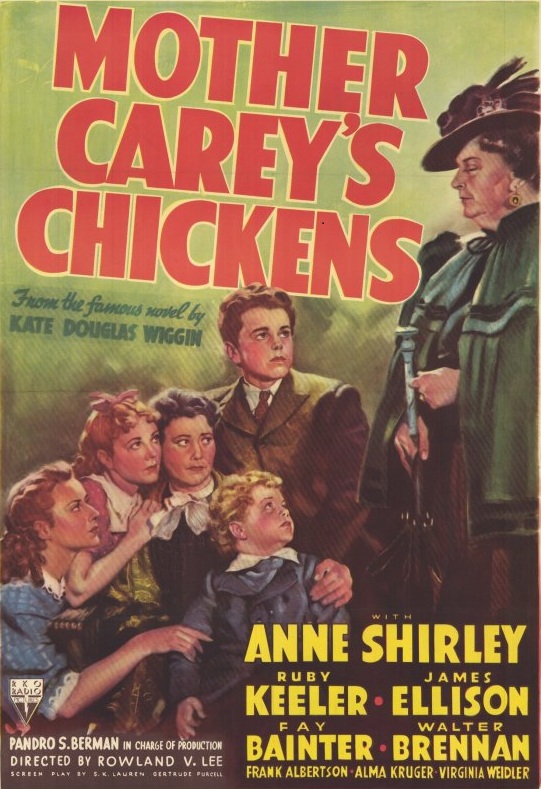
By the end of the 1930s it had appeared that Katharine Hepburn's star had already risen and fallen. Due to a string of commercial failures (BREAK OF HEARTS, SYLVIA SCARLETT, A WOMAN REBELS, QUALITY STREET, to name a few), the independent movie theatres had labelled Hepburn "box office poison." This bad press made it difficult for even her good films of the period (ALICE ADAMS, STAGE DOOR, BRINGING UP BABY) to turn a profit for the studio. When RKO Radio Pictures offered Katharine Hepburn a part in a film entitled MOTHER CAREY'S CHICKENS, she knew it was time for her to quit that studio and move on to greener pastures. She paid RKO $75,000 to loan her out to Columbia for HOLIDAY (for which she was paid a handsome $150,000).

Hope Williams
as Linda Seton
This wasn't the first time Hepburn had seen this material. After her graduation from Bryn Mawr in 1928, she got a job as understudy to Hope Williams who was playing the lead in Philip Barry's play Holiday on Broadway (it was while working as Williams' understudy that she married her beau from college days, Ludlow Ogden Smith, and moved to New York City). However, when Hepburn remembers this early opportunity in show business, she says "I soon realized that Hope was a very healthy girl. It wasn't that I wished her anything bad. She was very talented and very nice. But I understood that being an understudy was almost worse than not being in the theatre at all, if you understudied someone who never missed a performance" (Chandler, 122). When Williams offered to stay home for a matinee and allow Hepburn perform in her stead, Hepburn turned her down. "An excess of pride," explains Hepburn. "It was what I suffered from." Hepburn would later use material from Holiday for her first ever screen test, which is how she caught the eye of director and long-time friend George Cukor.

Linda and Johnny perform an
acrobatic stunt in HOLIDAY
HOLIDAY is a very thoughtful story, bordering on the philosophical. Johnny Case (Cary Grant) is engaged to Julia Seton (Doris Nolan) only ten days after meeting her on vacation at Lake Placid. When he comes home to meet the family, he confides in Julia's older sister Linda (Hepburn) about his plans for the future. His dream is to quickly make enough money to quit work and take an extended holiday so that he can take time to think and discover what it is he is working for. Although he and Linda understand the grand potential of his scheme, he has a harder time convincing his fiancee and their father the viability of the plan. Linda and Johnny are both taken aback by Julia's reluctance to stray from the severe conventionality of the patriarchal way of life exhibited by other members of their social class. Linda, like Johnny, has always despised wealth and the lifestyle it forces upon its subjects. Julia and her father, on the other hand, aspire to expand the family's fortune and respectability as far as possible and are unsympathetic towards Johnny's attempt to excuse himself from the cycle of acquiring wealth and privilege. Johnny is conflicted between his love from Julia and his desire to follow his dreams. Linda is conflicted by her love for her sister, and her sister's potential happiness with Johnny, and her own romantic feelings for him and the life he wants to pursue. (NOTE: In a future post on this blog, I intend to pursue a feminist reading of HOLIDAY, examining the role of the Hepburn character in the narrative of the story, as well as the more subtle nuances concerning the representation of women in the film text as a whole.)
"Don't you say a word about Leopold! He's very sensitive!"
"Your's?"
"Uh-huh - Looks like me."
Although critics praised HOLIDAY, and Katharine Hepburn's performance in it, depression-era audiences did not enjoy some of the inherent themes. While 30s movie-goers loved to observe "the privileged class enjoying its privileges" (THE PHILADELPHIA STORY (1940)), they were not sympathetic to the Johnny character who wanted to chuck a good job out the window so that he could have the freedom to think. America was looking for pragmatism and optimism during the 1930s, and Johnny's happy-go-lucky scheme to quit work and philosophize about life was too impractical to be attractive.

Katharine Hepburn did not linger long in Hollywood after the release of HOLIDAY. Selznick was tempted to cast her as Scarlett in GONE WITH THE WIND, but she withdrew her name from that contest. Though she must have been aware of what such a role would mean for her dwindling career, Hepburn never felt that the part was right for her. When Vivien Leigh was discovered, Hepburn returned East for a year or so of self-imposed exile from Hollywood. She would not be in Hollywood for all of 1939, universally acknowledged to be the biggest year in cinema history, but she would return in 1940 in a big way with THE PHILADELPHIA STORY.

17 May 2012

THE PHILADELPHIA STORY (1940)


The Philadelphia Story (1940) marks the turning point in Hepburn’s film career. She had decided to return home in 1938 after being labeled “box office poison” for a series of failed costume dramas at RKO. After a hurricane swept away her family’s Fenwick home, Hepburn tried to piece her life and career back together. Playwright Philip Barry visited her in Fenwick with a play which he had written for her about a Philadelphia socialite modeled after Hepburn herself.  The play ran for an unprecedented 415 performances. Hepburn’s then boyfriend, Howard Hughes, purchased the rights for her so that she would be able to return to Hollywood and call her own shots. Rather than returning to RKO, Hepburn signed a contract with MGM studio mogul Louis B. Mayer. The Philadelphia Story was the first film in which Hepburn had almost exclusive control over the casting of the film. She was given top billing across Cary Grant and Jimmy Stewart and her friend George Cukor was chosen to direct. 

The Philadelphia Story is about an aloof American socialite who is about to be remarried. Her fiance is a "man of the people" type of guy who has had to work his way up from the bottom. Things get complicated when her ex-husband C.K. Dexter Haven (Cary Grant) appears with some unsettling news. In order to pacify the editor of Spy magazine, the family must allow a reporter (Jimmy Stewart) and camerawoman attend the wedding, or else the magazine will print a shameful article about the father's philandering. The story spans the day and night leading up to the wedding. In this time, Tracy undergoes some serious character growth as she struggles to identify her purpose as a wife, woman, and as a human being. The script is witty and sophisticated, with just the appropriate amount of philosophical digging to get the audience thinking.

The plot of The Philadelphia Story both promotes and contradicts many feminist ideals. Some audiences viewed Tracy’s reformation as a taming, though many film critics debate this point. Although Hepburn’s character is scolded and insulted by the various male characters, they each in one way or another love, admire, or respect her. Tracy's "upper-classness" (Andrew Britton, 1995) is the epitome of Hepburn, but in a way very much unlike her alter ego Jo March. Tracy is an intellectual with very strong opinions about herself and about other people. She is not ambitious like Jo March but she sets very high standards for herself and the people around her. One might observe that Jo March is very like the young Hepburn, the kid behind the star, while Tracy epitomizes that which audiences identify in her star persona – class, intelligence, wit, and high moral standards. Through her role as Tracy, Hepburn came to represent a “special class of the American female,” full of strength and “inner divinity.”

There are three male leads in this film, arguably four if you count the father. Each has a unique relationship with Tracy. She expresses contempt for her father’s philandering, and although he cruelly calls her a “prig and a perennial spinster,” the two are reconciled by the end of the film. Her fiancé in the film worships her but his narrow-minded class and gender prejudices limit him from being truly equal to her. Jimmy Stewart’s character, the journalist Macaulay Connor , falls for Tracy, but only after expressing his own contempt for her class and lifestyle. The impossibility of their being matched is prevented by his snobbishness not hers, and in many ways one could argue that he is as reformed by the end of the film as she is.

Tracy’s relationship with her ex-husband, played by Cary Grant, is the most complex. He refuses to be impressed by her “so-called strength” and he leads the pack in trying to reform her, but it is clear that he truly loves her. His arguments for her reformation are not that she should be less of a strong, independent-minded woman, but that she should be more of a compassionate human being: “You’ll never be a first-class human being or a first-class woman until you have learned to have some regard for human frailty.” His appeal is not an attack on her female strength, but more an appeal to her humanity. It is clear that he and Tracy are evenly matched because he does not wish to break her will but only to refine it. The tension between Tracy and Macaulay is based on social and economic class division, but C.K. Dexter Haven argues on the basis of the human vs. either the merely material statue, or the other-worldly, deific goddess. He supports the refined, yet secular, view of mankind which is indicative of his expectations for perfection, regardless of social class. At one point he says "You (Tracy) could marry Mack the night watchman and I'd cheer for you!" 

Tracy's father's objections are the most infuriating because he blames her for his affair with another woman. He also attacks her womanhood when he says, 
"You have a good mind, a pretty face, a disciplined body that does what you tell it to.
You have everything it takes to make a beautiful woman except the one essential: an
understanding heart. And without that you might as well be made of bronze."
Her father's remarks might cut the deepest, but at bottom they are simply a reiteration of what Haven has already said, including the statue motif. The fact that these arguments are framed in a way that limits Tracy's femaleness, they are not read as such by the characters involved. He also practically retracts all that he has said by the end of the film when he denies that Tracy has ever been a disappointment as a daughter, thus voiding his entire arguments against her.

The film concludes on a high note, and Tracy has been able to maintain every ounce of dignity she had a the beginning of the story, which is why it is difficult to view this film as another Taming of the Shrew. The movie was a big hit, winning Hepburn another Academy Award nomination Jimmy Stewart his first Oscar. Hepburn’s career was back on track. From this point forward, Hepburn had a direct hand in the parts she chose to play and in the casting and filming of future projects. Not all of them were as successful as The Philadelphia Story, but Hepburn was able select roles that both stretched her abilities and took advantage of the strength of her increasingly feminist persona.


ShareThis